CRNA Info
The Future of Heart Rhythm: 5 Groundbreaking Shifts in How We Fix Atrial Fibrillation

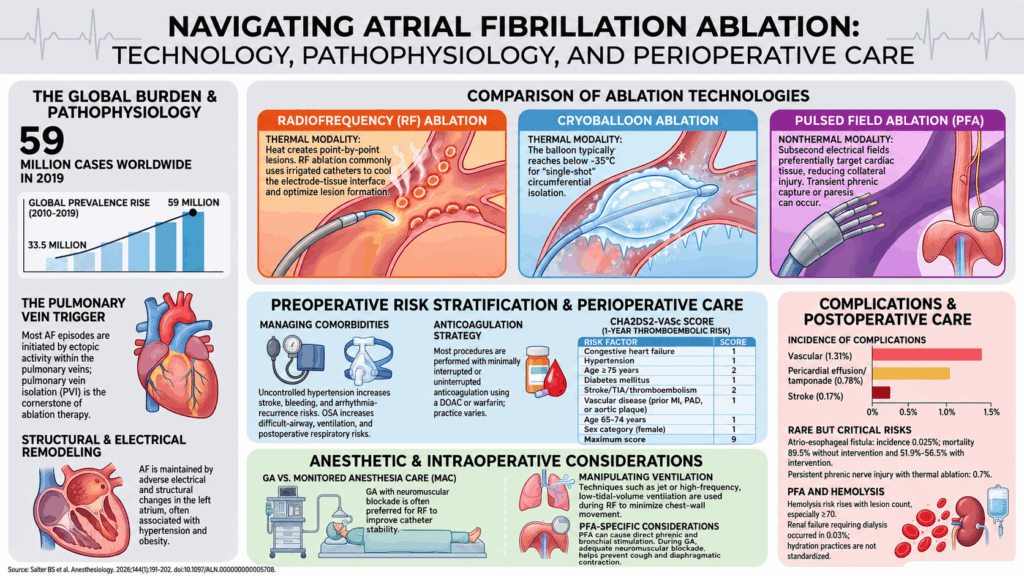
The human heart relies on a delicate electrical system to maintain its steady beat, but for millions of people, that system is under siege. Atrial Fibrillation (AF), a condition characterized by a chaotic, irregular heart rhythm, is experiencing a staggering global surge. Prevalence has climbed from 33.5 million cases in 2010 to approximately 59 million in 2019. In the United States alone, that number is projected to reach 12.1 million by 2030. As this “electrical storm” becomes a global epidemic, modern medicine is pivoting from merely masking symptoms with pharmaceutical “band-aids” to high-tech “rewiring” through catheter ablation. What was once a niche surgical intervention has evolved into a technological marvel of precision, moving the clinical standard toward early, aggressive rhythm control. For CRNAs navigating CRNA education requirements, understanding shifts in how we fix atrial fibrillation is essential to staying current with evolving clinical practice.
-
The “Birthplace” of the Arrhythmia: Why We Target the Pulmonary Veins
For years, AF was treated as a generalized cardiac malfunction. However, a seminal discovery shifted the entire landscape of electrophysiology: researchers identified that AF triggers often originate from ectopic activity within the pulmonary veins. This revelation turned a vague heart problem into a targeted “seek and destroy” mission. By identifying the pulmonary veins as the primary source of the problem, clinicians developed Pulmonary Vein Isolation (PVI). As the research highlights, the genesis of sustained AF episodes is a complex interplay of “ectopic activity in pulmonary veins along with adverse electrical and structural changes.”The impact of this targeted approach is profound. Beyond symptom relief, the ATTEST trial demonstrated that catheter ablation is significantly more effective than traditional medical therapy in delaying the progression of the disease from paroxysmal (intermittent) to persistent AF. By isolating these veins early, we are not just fixing a rhythm; we are potentially altering the long-term trajectory of the patient’s cardiac health. This evolving evidence is also reflected in many of our CRNA continuing education articles, helping anesthesia professionals better understand advancements in electrophysiology and perioperative care. Our CRNA CE resources help anesthesia professionals better understand advancements.
-
Beyond Fire and Ice: The Rise of Irreversible Electroporation
Until recently, isolating the heart’s wiring required thermal energy, either “burning” (Radiofrequency) or “freezing” (Cryoballoon) tissue to create a scar that blocks aberrant electrical signals. While effective, these methods are “non-selective,” meaning the energy doesn’t distinguish between a heart cell and the vital structures nearby.The industry is now shifting toward Pulsed Field Ablation (PFA) , a nonthermal modality. The comparison is a study in clinical evolution:
- Radiofrequency Ablation: Uses high-frequency current to create heat-induced cellular necrosis.
- Cryoballoon Ablation: Uses extreme cold (below -35°C) to achieve a “single-shot” circumferential freeze.
- Pulsed Field Ablation: Uses sub-second electrical fields to induce irreversible electroporation. Instead of changing the temperature, it causes myocyte membrane disruption, leading to cellular death without the collateral risks of thermal energy.PFA is fundamentally counterintuitive; it destroys targeted heart cells through electrical fields rather than thermal injury, offering a faster and potentially safer alternative to the “fire and ice” of the last decade. Our CRNA CEU online articles are designed to keep you informed of evolving standards in care.
-
The “Selective Killer”: Precision with a Clinical Caveat
The most significant advantage of PFA is tissue selectivity. Different tissues have different energy thresholds for electroporation. PFA can be tuned to preferentially target cardiac cells while sparing adjacent structures. This is a game-changer for avoiding the “atrio-esophageal fistula”, a rare (0.025%) but catastrophic complication of thermal ablation that carries an “exceptionally high mortality rate” of 89.5%.
However, as a Senior Medical Science Liaison, I must note that “selective” does not mean “risk-free.” While the MANIFEST-17K study of over 17,000 patients confirmed that PFA resulted in zero persistent phrenic nerve injuries, compared to a 0.7% rate in thermal procedures, it also revealed a new “Clinical Caveat”: hemolysis. High-energy PFA applications can cause cell membrane disruption and osmotic imbalance in red blood cells, leading to erythrocyte rupture and the release of free hemoglobin. In cases where operators delivered 70 or more lesions, there is a documented risk of hemolysis-related acute renal failure. Furthermore, while PFA spares the phrenic nerve from permanent damage, “temporary paresis” still occurs, requiring vigilant intraoperative monitoring. To mitigate these risks, modern protocols now emphasize careful lesion counting and aggressive post-procedural hydration. These topics are valuable while earning CRNA CE credits and expanding your knowledge of cardiac procedures and emerging technologies. Articles covering emerging procedures like PFA provide valuable anesthesia CE resources for CRNAs.
-
The Anesthesia Paradox: Why Paralysis Protects the Map
As ablation technology becomes faster, the anesthesia required to support it has paradoxically become more sophisticated. PFA uses intense electrical pulses that cause involuntary muscle contractions and a “dry cough” via direct phrenic and bronchial stimulation. This is not merely a matter of patient comfort. This movement causes a “loss of fidelity” in the 3D cardiac mapping systems used to guide the catheter. To prevent this, as well as the “derecruitment of the lungs” and associated hypoxia, clinicians often utilize general anesthesia combined with a total neuromuscular blockade (temporary paralysis). This ensures absolute immobility, maintaining the integrity of the 3D map and allowing the electrophysiologist to deliver pulses with millimeter precision. It is a striking irony: the procedure itself has become a “day trip,” yet the “behind-the-scenes” medical management has moved toward high-level paralysis to ensure procedural success.
-
The “Blanking Period” and the Day-Trip Standard
The final shift is the normalization of the heart surgery “day trip.” Despite the complexity of entering the left atrium, vascular complication rates remain manageable (approximately 1.31%), and the stroke risk is notably low at 0.17%. Most institutions now discharge patients within 3 to 4 hours of the procedure. However, the “fix” isn’t instantaneous. Patients must navigate the “blanking period”, a 2-to-3-month window where the heart tissue is still healing and stabilizing. During this time, early recurrences of AF are not necessarily indicative of failure; they are often temporary reactions to the procedure itself. For CRNAs using CRNA programs online to maintain and expand their clinical knowledge, understanding post-procedural considerations such as the blanking period provides important context for patient care.
Conclusion: A New Era of Cardiac Care
We have entered an era where “waiting and seeing” is no longer the gold standard. Findings from the EAST-AFNET trial have proven that early rhythm control is superior to conventional management for stroke prevention. When paired with the ATTEST trial’s data on delaying disease progression, the mandate is clear: early intervention is the new clinical imperative. As we refine these tools to become even more selective and efficient, we face a new philosophical frontier in medicine. When the tools to fix our most complex organs become this precise and selective, how will we redefine the “risks” of aging? For the 59 million people living with Atrial Fibrillation, the answer is no longer found in a pill bottle, but in the sub-second electrical pulses of the modern electrophysiology lab.
Clinical topics like this support CRNA continuing education credits and can complement broader learning completed through CPC Core Modules. For CRNAs, staying informed through CEUs helps support evidence-based practice throughout a career. This type of advanced clinical content also contributes toward CRNA Class A credits when offered as an approved educational activity.
Log in to CRNAeducation.com today!